Reviewing Daddy’s Little Pumpkin for Fall Embroidery
As an embroidery designer who spends more time staring at stitch simulations than I do sleeping, I have learned that not every cute graphic translates well to thread. We see thousands of digital embroidery file options flooding the market every season, especially during the autumn rush. Most are fine for a quick home project, but few hold up under the scrutiny of a commercial embroidery project. When I pulled up Daddy’s Little Pumpkin, I was looking for more than just seasonal charm. I wanted to know if this design had the structural integrity and visual balance required for a professional finished product.
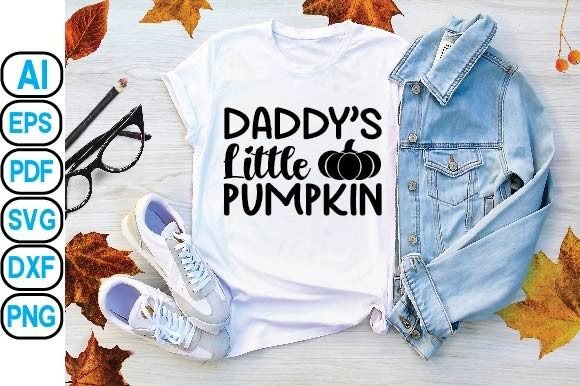
The first impression of Daddy’s Little Pumpkin is warm and nostalgic. It captures that specific, tender mood of early parenthood mixed with the cozy aesthetics of fall. The layout feels balanced, avoiding the clutter that often plagues holiday-themed graphics. For those of us creating T-Shirt Designs or Graphics for apparel, this balance is critical. A design that looks busy on a screen often becomes a tangled mess of thread breaks and puckering on fabric. This design, however, suggests a thoughtful approach to spacing and element hierarchy.
Real-World Application: The Custom Tote Test
To truly evaluate a design, you have to imagine it in situ. I recently worked on a custom order for a local boutique specializing in new parent gifts. They needed a standout item for their fall collection. I envisioned Daddy’s Little Pumpkin stitched onto a heavy canvas tote bag design. Canvas is unforgiving; it shows every flaw in tension and density.
In this scenario, the design’s simplicity became its greatest asset. Complex applique design elements can sometimes overwhelm a tote’s texture, but here, the clean lines allowed the natural weave of the fabric to complement the stitching. I imagined using a rich burnt orange for the pumpkin and a soft cream for the text. The contrast would pop against a natural or dark olive canvas. This is where the design shines: it is versatile enough to work as a focal point without needing excessive embellishment. It feels like a genuine handmade product rather than a mass-produced sticker.
Performance Across Different Garments
Beyond totes, I considered how Daddy’s Little Pumpkin would perform on various garments. For sweatshirt embroidery, the design needs to handle the loft of fleece or French terry. If the stitch density is too high, the fabric will pucker around the edges. If it is too low, the garment’s texture will show through the letters. Based on the visual weight of the graphics, this design appears suitable for medium-density fill stitches. It should sit comfortably on a chest pocket or centered on the front of a crewneck without distorting the fabric.
For baby embroidery, such as onesies or bibs, the scale is everything. Parents want something adorable but not overwhelming. This design’s proportion seems ideal for a small hoop placement. However, when moving to curved surfaces like caps, caution is required. Caps demand precise digitizing to account for the curve. While the source files include vector formats like AI and EPS, which are great for resizing, the actual embroidery file must be specifically digitized for hat frames. If you are using this as a base for a cap, ensure your digitizer has adjusted the pull compensation and underlay stitches accordingly.
Navigating Fabric and Technical Challenges
No design is universal, and Daddy’s Little Pumpkin has its limitations. When working with thin or stretchy fabrics, such as jersey knits for custom apparel, stability is key. I always recommend using a cut-away stabilizer for these materials to prevent the design from shifting during wear and washing. The text elements, while charming, could suffer if the fabric stretches excessively.
Dark fabrics present another challenge. If you are stitching on black or navy, you cannot rely on the fabric color to define the edges. You may need to add a subtle running stitch border or adjust your thread colors to ensure legibility. A white or light gray thread might get lost, so testing contrast is essential. I often create black and white mockups to check readability before threading the machine. This simple step saves hours of unpicking later.
Additionally, consider the washability. Items like kitchen towels or aprons undergo frequent laundering. Dense stitch areas can become stiff over time. If this design is intended for high-use items, verify that the stitch density allows for flexibility. A softer hand feel increases the perceived value of the personalized gift.
Commercial Viability for Etsy Sellers and Makers
For Etsy seller accounts and small shop owners, visual appeal drives clicks. Daddy’s Little Pumpkin has strong "giftability." It taps into the emotional market of first-time dads and fall celebrations. When listing this as a small shop product, presentation matters. Use high-quality printable mockup images that show the texture of the thread. Buyers need to see the sheen of the satin stitch and the coverage of the fill stitch to trust the quality.
This design also serves well as part of a broader collection. Pairing it with matching sibling designs or complementary fall motifs can increase average order value. As a craft business owner, consistency in style builds brand recognition. If your brand leans toward rustic, handmade aesthetics, this design fits seamlessly. It avoids the overly cartoonish look that can sometimes cheapen a brand’s image.
Practical Designer Notes and Pre-Flight Checks
Before you commit to production, there are several technical steps you must take. The product description states you receive a ZIP folder with AI, SVG, DXF, PDF, EPS, and PNG files. Note that these are primarily vector and image formats, not native machine embroidery files like PES or DST. This is a crucial distinction. You will need to use embroidery software to convert these vectors into stitch data, or ensure you are purchasing the correct machine-ready format from the vendor if available.
If you are converting the SVG or AI file yourself, pay close attention to:
- Stitch Density: Adjust based on your fabric type. Lower density for knits, higher for wovens.
- Thread Colors: Test different palettes. Traditional orange and green work, but consider muted tones like mustard and sage for a modern look.
- Hoop Size: Confirm the design fits your standard hoops. A 4x4 or 5x7 hoop is likely ideal for this scale.
- Small Details: Zoom in on the vector file. Are there tiny anchor points that might cause thread breaks? Simplify if necessary.
- Licensing: Always confirm the license terms. Can you sell finished physical items? Can you resell the digital file? Never assume.
Testing on scrap fabric is non-negotiable. Stitch out the design on the same material you plan to use for the final product. Check for registration issues, thread breaks, and overall aesthetic balance. Only after a successful test run should you proceed to the final embroidered patch or garment.
Final Verdict on Design Utility
Daddy’s Little Pumpkin is a strong contender for fall production. It balances emotional appeal with practical design constraints. It works well for holiday embroidery projects, from nursery decor to adult apparel. Its strength lies in its clarity and adaptability. By respecting the technical requirements of different fabrics and ensuring proper digitization, you can transform this graphic into a high-value commercial embroidery asset. For designers and makers willing to put in the prep work, this design offers a reliable path to creating memorable, sellable goods.